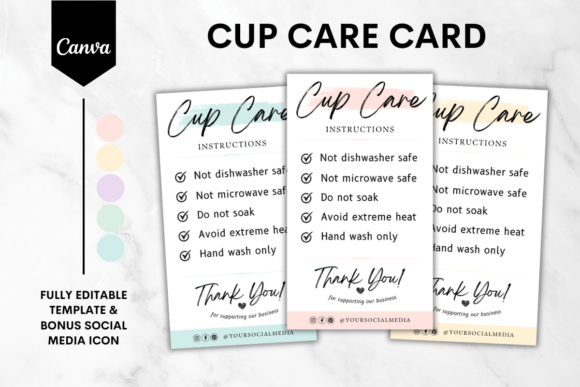
Cup Care Card Canva Template Mini 1
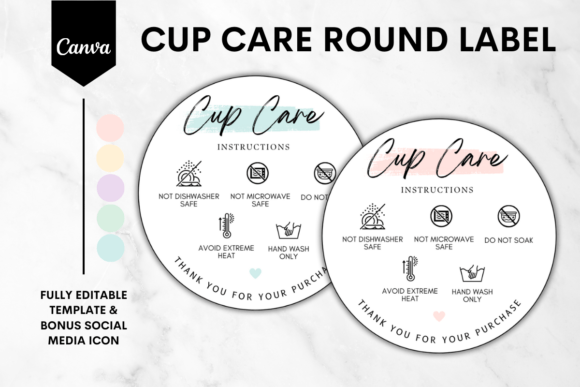
As a designer who’s stitched over 300 custom embroidery projects—from baby onesies to boutique aprons—I opened Cup Care Card Canva Template Mini 1 expecting something functional. What I found was quietly clever: a compact, clean-lined care card layout that doesn’t shout, but still holds space with intention. It’s not flashy. It’s not ornate. But it *works*—especially when you’re stitching for real people who actually read (and rely on) care instructions.
I tested it while prepping a batch of embroidered kitchen towels for a local café pop-up. Each towel featured a small monogram + custom tea motif—and the Cup Care Card Canva Template Mini 1 became the subtle, branded tag tucked into the packaging. No glitter, no cutesy fonts—just soft rounded corners, balanced line spacing, and room for three concise care lines (e.g., “Hand wash cold,” “Lay flat to dry,” “Do not iron directly”). That restraint is its strength. It feels like part of the product—not an afterthought.
This isn’t a machine embroidery design or applique design you load into your hoop. It’s a Graphics asset—specifically a Marketing Templates piece meant for digital customization, then printed or applied as a finished label. That distinction matters. If you’re imagining stitching the *entire card* as an embroidery file? You’ll be disappointed. But if you’re building cohesive, trustworthy handmade products—where clarity and brand voice matter as much as thread count—Cup Care Card Canva Template Mini 1 earns its place in your toolkit.
Here’s where it shines in real embroidery-adjacent work:
- Embroidered tote bag design: Tuck a printed version inside the pocket or attach it to a fabric loop—no extra stitching needed, just clean branding that matches your logo’s tone.
- Sweatshirt embroidery or custom apparel: Use it in your Etsy listing mockups. Customers scrolling past 27 similar sweatshirts notice the one with thoughtful, consistent care guidance—even if it’s just a printable card in the photos.
- Baby embroidery and nursery decor: Its gentle proportions and uncluttered layout feel safe and calm—perfect for matching onesie sets or organic cotton blankets where parents scan for washing safety first.
- Holiday embroidery and wedding gifts: Pair it with a hand-stitched linen napkin or embroidered ceramic mug sleeve. The card becomes part of the unboxing ritual—small, sincere, and quietly professional.
- Craft business and Etsy seller workflows: Drop it into Canva, swap your font and brand colors, export as PDF or PNG, and use it across packaging inserts, digital product previews, and even social media posts explaining how to care for your pieces.
But let’s talk about where to pause. Because even smart design has limits:
- Avoid using it as a standalone embroidered patch. The fine lines and tight text aren’t built for satin stitch or fill stitch fidelity at under 2 inches wide—especially on textured fabrics like terry cloth or fleece.
- Don’t scale it down for caps or curved surfaces. That clean layout depends on legibility at ~2.5–3 inches wide. Shrinking further blurs hierarchy and risks making “hand wash” look like “hand was.”
- Test contrast carefully on dark fabric. Since it’s a Canva template, you control background color—but if you print it on black cardstock for a rustic coffee shop bundle, make sure your white or cream text stays crisp and readable.
- Layer thoughtfully on layered garments. A printed card tucked into a double-layered apron pocket works. Trying to embroider over it—or stitch it *onto* a seam allowance—adds bulk and confusion.
What surprised me most was how much Cup Care Card Canva Template Mini 1 elevated perceived value—not through decoration, but through consistency. When customers see the same clean typography and tone across your embroidered pillow cover, your printable mockup, and the little card tied to their holiday mug set, it signals care beyond the stitch. That builds trust. That makes your personalized gift feel intentional, not improvised.
For embroidery designers, here are the practical notes I jotted mid-project:
- Always test the printed version on scrap fabric first—especially if attaching with fusible web or fabric glue. Some inks bleed slightly on natural fibers.
- Check thread color contrast if adding a tiny embroidered accent nearby (e.g., a single stem stitch “cup” icon beside the card). Don’t let your beautiful navy thread clash with a low-contrast gray background.
- Review stitch density only if you’re combining it with adjacent embroidery. High-density fills near the card’s edge can warp lightweight fabric—and distort printed text alignment.
- Confirm hoop size isn’t relevant here—but confirm your *print size* fits your intended application. A 3″ × 2″ card won’t fit neatly inside a standard 4″ × 6″ gift tag holder.
- Inspect small details in both light and dark mode—Canva’s preview sometimes hides subtle kerning issues until exported.
- Use proper stabilizer only for surrounding embroidery—not the card itself. But remember: if you’re stitching *near* it, medium-weight tear-away helps keep everything flat and aligned.
- Verify licensing before selling finished items. Since this is a digital embroidery-adjacent asset, check whether commercial use is permitted for physical products (like your embroidered tea towel bundles) or just digital resale.
In short: Cup Care Card Canva Template Mini 1 isn’t about wow factor. It’s about quiet confidence—the kind that says, “I made this with care, and I want you to keep it that way.” For embroidery designers stitching meaning into every project, and for creative entrepreneurs building brands people return to, that small, well-placed card does more than list instructions. It completes the story.