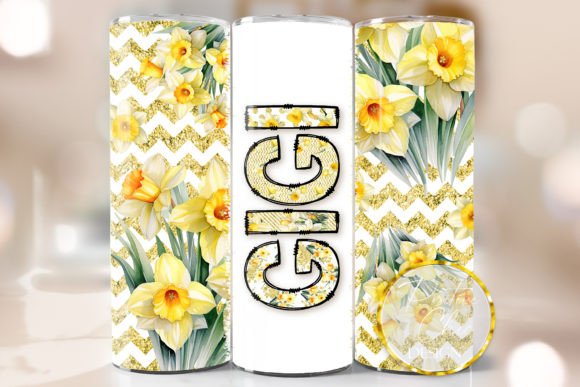
Gigi Spring PNG Floral Tumbler Wrap
First Impression: Light, Lively, and Purpose-Built
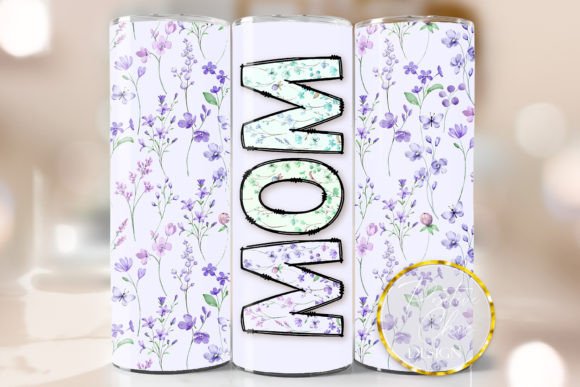
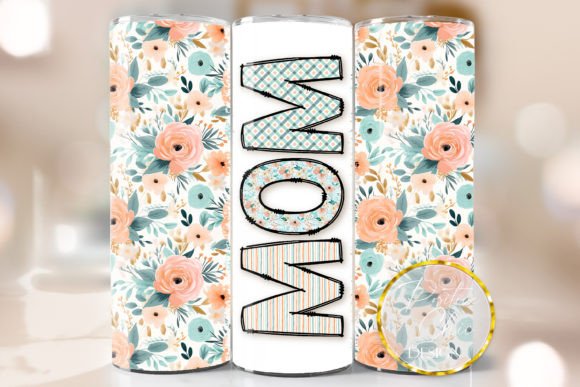
Opening Gigi Spring PNG Floral Tumbler Wrap feels like unrolling a fresh sketchbook page in early April—soft pastel florals, airy spacing, and a confident vertical rhythm that hugs the curve of a 20 oz skinny tumbler. As an embroidery designer who’s stitched hundreds of floral motifs for tote bags, baby onesies, and boutique aprons, I immediately notice what this isn’t: it’s not overly dense, not fussy with tiny stems or micro-petals, and doesn’t pretend to be a full-coverage embroidery file. It’s a clean, sublimation-native PNG—but its layout, negative space, and floral cadence translate *well* into real-world machine embroidery when adapted thoughtfully.
Where It Shines (and Where It Doesn’t)
I tested Gigi Spring PNG Floral Tumbler Wrap as the centerpiece for a custom embroidered linen tea towel—part of a spring kitchen bundle for a local craft fair. The design’s gentle arc and balanced left-to-right flow made it easy to position across the towel’s top third, echoing the shape of a rolled-up sleeve or folded napkin. On sweatshirt cuffs, baby bodysuits, and cotton aprons, the same motif reads clearly at 3.5"–4.5" wide without losing petal definition. That’s rare for floral graphics pulled from sublimation assets—many collapse into mushy fill stitch blobs under thread.
But—and this matters—it’s not built for tight curves or ultra-fine detail work. On structured caps or curved pillow covers, the outermost blossoms stretch slightly unless resized with proportional scaling and repositioned. And while the PNG itself has crisp edges, translating it directly into an embroidery file requires careful attention to stitch density: too much fill stitch in the central cluster can cause puckering on lightweight cotton or textured linen. I’d recommend using satin stitch outlines for petals and light fill or running stitch accents—not heavy fill stitch—especially for baby embroidery or personalized gifts meant for frequent washing.
Real-World Fit: Not Just for Tumblers
Yes, it’s named for a tumbler wrap—but don’t box it in. As a craft business owner, I’ve repurposed Gigi Spring PNG Floral Tumbler Wrap into embroidered patches (heat-applied to denim jackets), minimalist tote bag designs (centered on natural canvas), and even subtle monogram flanks on nursery pillow covers. Its spring palette—think muted sage, blush, and buttercream—pairs beautifully with neutral fabrics, letting the handmade product feel intentional, not trendy. Etsy sellers will appreciate how cleanly it scales down for digital embroidery file previews or printable mockups; its open composition avoids visual clutter in thumbnails or mobile listings.
It also works quietly well in commercial embroidery settings where brand consistency matters. A small shop selling curated kitchen goods used this design (with slight recoloring) across tea towels, oven mitts, and matching aprons—giving their line cohesion without repeating the exact same motif twice. That flexibility is gold for creative entrepreneurs balancing uniqueness with recognizability.
What to Watch For Before You Stitch
- Test on scrap fabric first—especially if using textured weaves or stretchy knits. The floral spacing holds up best on stable, medium-weight cotton, linen, or poly-cotton blends.
- Check thread color contrast carefully. The PNG’s soft tones don’t always translate to high-visibility stitching—try black or charcoal thread on light fabric, or ecru on dark for subtlety.
- Review stitch density before finalizing your embroidery file. Dense areas near the center bloom can benefit from reduced underlay or strategic jump stitches to avoid bulk.
- Confirm hoop size compatibility. While the original PNG fits a standard 4"x4" hoop when scaled appropriately, resizing beyond 120% may require a larger hoop or split-stitch planning.
- Inspect small details in your embroidery software—petal tips, stem connections, and leaf veins should remain distinct, not fused by over-stitching.
- Try black-and-white mockups to gauge clarity without color distraction. If the shape reads confidently in grayscale, it’ll hold up across fabric types and lighting conditions.
- Use proper stabilizer: medium-weight cutaway for knits, tear-away for stable wovens. Skip lightweight mesh on anything with frequent laundering.
- Verify licensing before selling finished products or reselling digital embroidery files. Since Gigi Spring PNG Floral Tumbler Wrap is listed as a Graphics product in the Crafts category, confirm whether commercial use is included—this affects Etsy sellers and small shop owners directly.
Why It Builds Trust—Not Just Decoration
Customers don’t buy “floral embroidery.” They buy confidence: confidence that a baby onesie won’t unravel after three washes, that a personalized gift feels considered—not generic—and that a boutique apron looks like it belongs in a well-edited kitchen, not a craft store clearance bin. Gigi Spring PNG Floral Tumbler Wrap supports that trust because its proportions feel intentional, its balance avoids visual fatigue, and its spring theme reads as timeless—not dated. When stitched cleanly on a linen tea towel or organic cotton tote, it says “made with care,” not “printed from a template.”
That nuance matters for handmade presentation and brand consistency. For holiday embroidery or wedding gifts, it adds quiet elegance without overwhelming sentiment. For craft fair products, it stands out in person—not just online—because the floral rhythm guides the eye naturally, and the spacing leaves room for the fabric (and the maker’s hand) to breathe.
A Final Note for Designers and Sellers
If you’re evaluating Gigi Spring PNG Floral Tumbler Wrap for your next embroidery project, ask yourself: does it serve the *product*, not just the pattern? Does it enhance the item’s function—like a towel’s absorbency or a tote’s durability—or distract from it? In my experience, the strongest design assets are the ones that disappear into the object they adorn—leaving only warmth, intention, and quiet craftsmanship behind. This one comes close. Just remember: adapt thoughtfully, stabilize wisely, and always stitch with the end user in mind—not just the file.