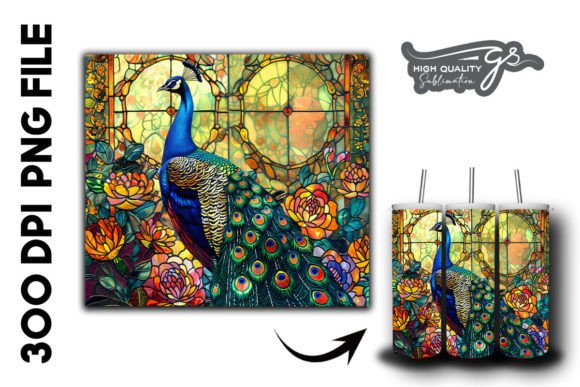
Stained Glass Peacock Tumbler Wrap 39
A Designer’s First Glance: Bold, Ornamental, and Unapologetically Craft-Centric
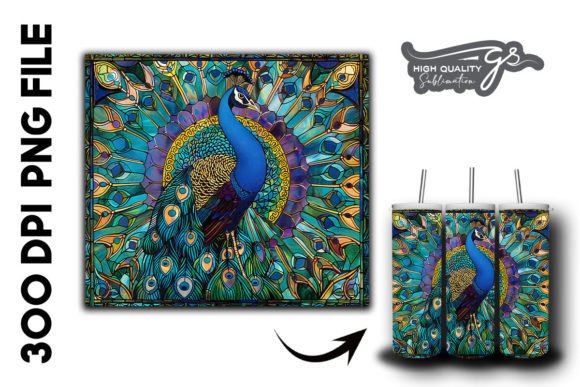
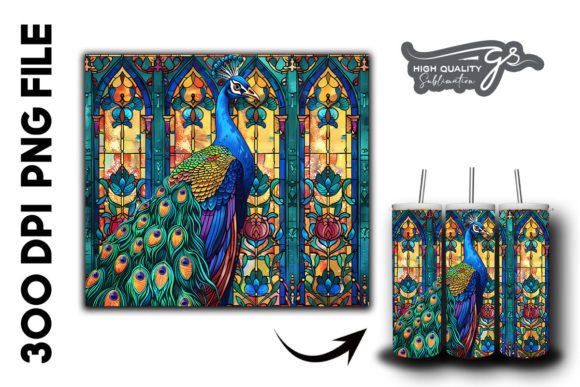
When Stained Glass Peacock Tumbler Wrap 39 landed in my inbox, I paused—not because it screamed “trendy,” but because it whispered something quieter and more intentional: craftsmanship. The peacock motif is instantly legible, but it’s the stained-glass treatment that sets this apart. Think leaded lines, jewel-toned zones, and deliberate negative space—not a photorealistic rendering, but a stylized, stitch-friendly interpretation. It doesn’t try to mimic glass; it *suggests* it through clean vector edges and rhythmic shape divisions. That matters. A lot. In embroidery, clarity trumps complexity every time—and this design respects that boundary.
Where It Shines: Real Projects, Real Impact
Last week, I prepped a custom embroidered tote bag for a local botanical boutique. Their request? “Something elegant but not fussy—artful enough for their window display, sturdy enough for daily use.” I opened Stained Glass Peacock Tumbler Wrap 39, scaled it to 4.2 inches wide, and ran a test on medium-weight canvas with tear-away stabilizer. The result? Crisp satin-stitched outlines, balanced fill-stitch areas that didn’t overwhelm the fabric, and a visual weight that read beautifully from three feet away—no squinting, no lost detail. It felt like a finished product, not a digital placeholder.
This design naturally elevates handmade products where intentionality matters: baby onesies (with simplified thread palette), aprons for artisan bakers, pillow covers for boho nurseries, and even small-batch tea towels. As a sweatshirt embroidery, it holds up well on midweight fleece—just avoid ultra-plush or heavily brushed surfaces where fine lines can blur. For Etsy sellers, it’s a strong candidate for curated holiday embroidery bundles: think “peacock + pine” or “stained glass + velvet” pairings that signal thoughtful curation, not algorithm-chasing.
Where to Pause—and Why
Stained Glass Peacock Tumbler Wrap 39 isn’t built for micro-embroidery. Don’t force it into a 2.5-inch hoop on a curved cap front—the tail feathers will compress, and those delicate leaded lines may merge. Likewise, skip stretchy knits unless you’re using cutaway stabilizer and reducing stitch density manually. On dark fabric, test your thread colors early: light jade or amethyst fills need contrast-rich underlay, or they’ll recede instead of pop. And while the design avoids tiny lettering or nested corners, its ornamental borders do demand attention on textured fabrics like linen or burlap—those subtle gaps between “glass” panels can catch on loose weaves if stabilizer isn’t fully secured.
What It Does for Your Brand—and Your Buyers
Customers don’t buy embroidery files. They buy confidence—in the maker, the material, and the meaning. Stained Glass Peacock Tumbler Wrap 39 reads as intentional, not generic. That perception lifts perceived value: a $38 embroidered pillow cover feels like a boutique find, not a craft-fair afterthought. For small shop owners, it supports brand consistency without demanding rigid repetition—you can rotate thread palettes (teal + gold vs. plum + charcoal) and keep the same refined voice. And for personalized gifts? Its balance of artistry and clarity makes it memorable without being intimidating. No one wonders, “What *is* that?” They say, “I want that on my morning mug—and my daughter’s backpack.”
Practical Notes Every Embroidery Designer Should Run Through
- Test first on scrap fabric—especially if stitching on blends or textured weaves. Stitch density and tension shift subtly across materials.
- Check thread color contrast on both light and dark mockups before finalizing your palette. Jewel tones work best when they sing—not whisper.
- Review stitch density in dense areas (like the peacock’s eye or central feather cluster). Overly tight fills can cause puckering on lightweight cotton.
- Confirm hoop size compatibility—this design suits standard 4x4 or 5x7 hoops comfortably, but verify before hooping expensive garments.
- Inspect small details at 200% zoom in your embroidery software. Are the leaded lines clean? Do any sharp angles risk thread breaks?
- Use proper stabilizer: medium tear-away for stable wovens, cutaway for knits or high-drape fabrics.
- Verify licensing before selling finished items or bundling this as part of a commercial embroidery kit. If resale rights aren’t explicit, assume personal-use only.
- Try a black-and-white mockup. If the design holds its structure without color cues, it’s inherently strong—and easier to adapt across seasonal collections.
Final Thought: Not Just a Graphic—A Design Decision
Stained Glass Peacock Tumbler Wrap 39 isn’t background noise. It’s a design decision—one that says, “I care about how this looks when stitched, how it feels in hand, and how it lands with someone who receives it.” Whether you’re an Etsy seller building a signature style, a craft business owner refreshing holiday merchandise, or a designer choosing assets for client apparel projects, this file earns its place not because it’s flashy, but because it’s functional, expressive, and quietly confident. It doesn’t ask for attention—it earns it, stitch by careful stitch.