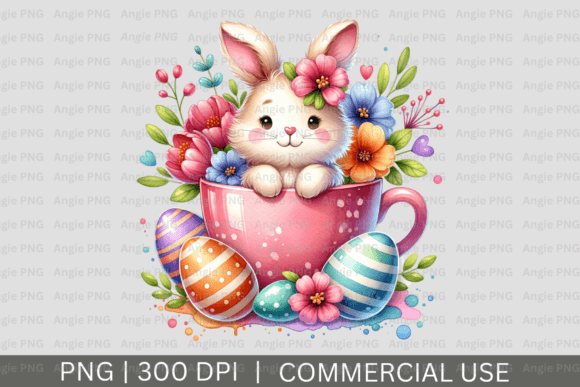
Watercolor Easter Bunny in Cup PNG
As a designer who’s stitched hundreds of holiday motifs—from delicate linen napkins to bold sweatshirt frontals—I opened Watercolor Easter Bunny in Cup PNG expecting charm. What I found was something more nuanced: a soft, painterly silhouette with quiet intentionality. It’s not a high-contrast clipart bunny; it’s a gentle, cup-holding figure rendered in translucent washes and subtle gradients—ideal for crafters who value handmade warmth over graphic punch.
A Real Project Test: Embroidering This on a Linen-Cotton Tote
Last week, I prepped a custom order for a local boutique: six medium-weight linen-cotton tote bags, each with a single embroidered motif for Easter weekend pop-ups. I chose Watercolor Easter Bunny in Cup PNG as the lead design—not for its complexity, but for its emotional resonance. Customers browsing spring markets respond to softness, especially when paired with natural fibers. The bunny’s posture (slightly tilted, cup cradled like a tiny offering) reads as tender and unhurried—perfect for baby showers, nursery decor, or eco-conscious gifting.
But here’s what matters most in practice: how does it translate from screen to stitch? Since this is a digital embroidery file (not a pre-digitized machine embroidery design), it requires careful interpretation. I used it as a reference layer in my digitizing software—not as a direct stitch map. That distinction is critical. A PNG alone won’t embroider; it must be converted into an embroidery file with appropriate stitch types: satin stitch for the cup’s rim, low-density fill stitch for the bunny’s body, and fine running stitch for subtle whisker lines.
Where It Shines—and Where It Needs Thought
Watercolor Easter Bunny in Cup PNG excels in projects where subtlety is the goal:
- Personalized baby items: Stitched on organic cotton onesies or burp cloths, its muted palette avoids visual overload—especially next to delicate embroidery fonts or minimalist monograms.
- Aprons and tea towels: On textured kitchen linens, the watercolor effect translates beautifully into gentle tonal variation, not muddy detail.
- Pillow covers and nursery wall hangings: Its centered, balanced composition holds visual weight without dominating a space.
- Digital scrapbooking and printable mockups: As a Graphics asset, it layers cleanly over pastel backgrounds—ideal for Etsy sellers building cohesive product bundles.
But don’t assume it’s universally forgiving. On dark fabric, the lightest watercolor washes vanish unless you add underlay or adjust thread contrast deliberately. On stretchy knits (like baby bodysuits), those soft edges blur without proper stabilizer—so test on scrap first. And avoid using it directly for embroidered patch production unless you’re prepared to reinforce the outer edge with a tight satin border; otherwise, raw cut edges may fray.
Design Integrity in Commercial Use
If you’re an Etsy seller or small shop owner listing finished goods, Watercolor Easter Bunny in Cup PNG adds quiet sophistication to your catalog—but only if handled with care. I’ve seen too many listings where a lovely digital asset gets poorly digitized: over-stitched, oversaturated, or misproportioned. That undermines customer trust. Buyers of handmade products expect clarity, consistency, and intention—not just “cute.” This design rewards restraint: fewer colors, lower stitch density, and thoughtful placement (centered on a pocket, aligned with a seam, or scaled modestly on a cap front).
For commercial embroidery, licensing is non-negotiable. Since this listing confirms it’s a DIGITAL File of a printable PNG download, verify whether your intended use—especially resale of physical embroidered items—falls within the creator’s terms. Many designers permit small-batch commercial use, but never assume. When in doubt, reach out before listing your tote bag design or sweatshirt embroidery collection.
Practical Designer Notes Before You Stitch
- Test on scrap fabric first—especially if using textured or dark materials. Watercolor gradients behave differently under thread than on screen.
- Review stitch density. Too much fill stitch in the bunny’s ear or cup base will create stiffness. Aim for 30–40% density in wash areas.
- Confirm hoop size compatibility. At standard sizing, this fits comfortably in a 4×4 hoop—but scale up carefully for larger apparel.
- Inspect small details. The cup handle and bunny’s paw are subtle. If digitizing yourself, consider reinforcing those with a narrow satin stitch rather than relying on fill alone.
- Try black-and-white mockups. Does the shape hold up without color? It should—clean silhouettes matter more than pigment in embroidery.
- Use tear-away + cut-away stabilizer combo for medium-weight fabrics. The watercolor softness demands stability, not rigidity.
- Compare thread colors across light and dark backgrounds. A pale mint thread may glow on ivory linen but disappear on navy denim.
Ultimately, Watercolor Easter Bunny in Cup PNG isn’t a “plug-and-play” embroidery file—it’s a thoughtful design asset for makers who understand that the best handmade product begins with discernment. It invites slower stitching, gentler palettes, and deeper attention to context: Is this for a child’s first Easter basket? A boutique’s seasonal line? A personalized gift with emotional weight?
Used well, it elevates your craft business by signaling care—not just capability. And in a market saturated with loud, fast graphics, that quiet confidence is exactly what sets apart the work of a seasoned designer from the rest.